
















Product Launch Q4 / 2026

Transforming ultrasound signals into clinical decision support

Our device delivers fast, safe, and cost-effective decision support for traumatic brain injury - without the risks of invasive procedures.

Our partners

The technology behind our non-invasive ICP assessment

Scientifically validated, non-invasive, and designed for use directly at the patient's bedside
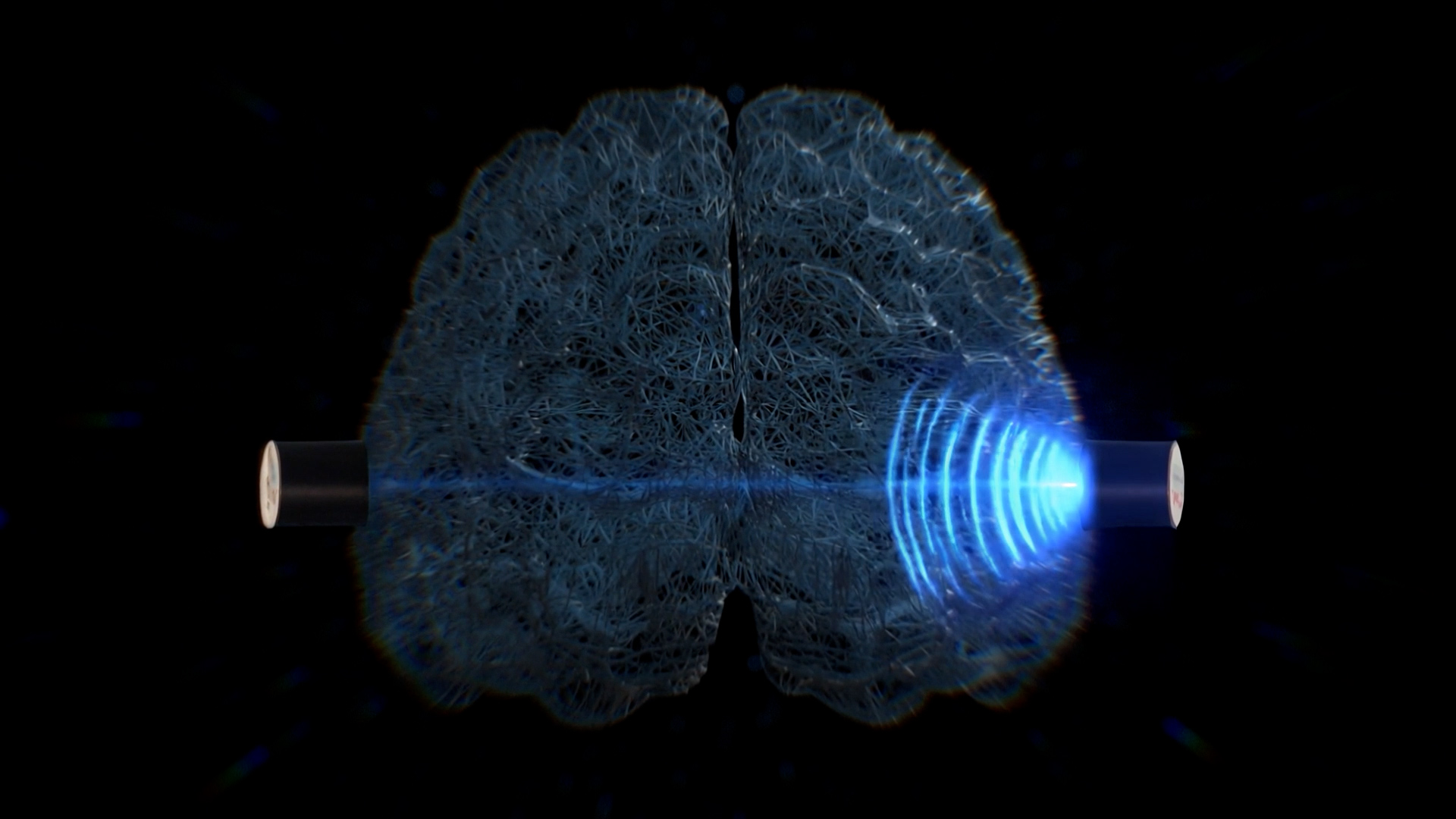
Transmission ultrasound
We turn ultrasound signals into meaningful intracranial pressure insight - without entering the skull. Our device represents a new era in brain monitoring.
Using transmission ultrasound, it detects the movements of the skull and the dynamic changes within the brain’s three compartments: brain tissue, blood, and cerebrospinal fluid (CSF).

From raw signal to brain pulse curve
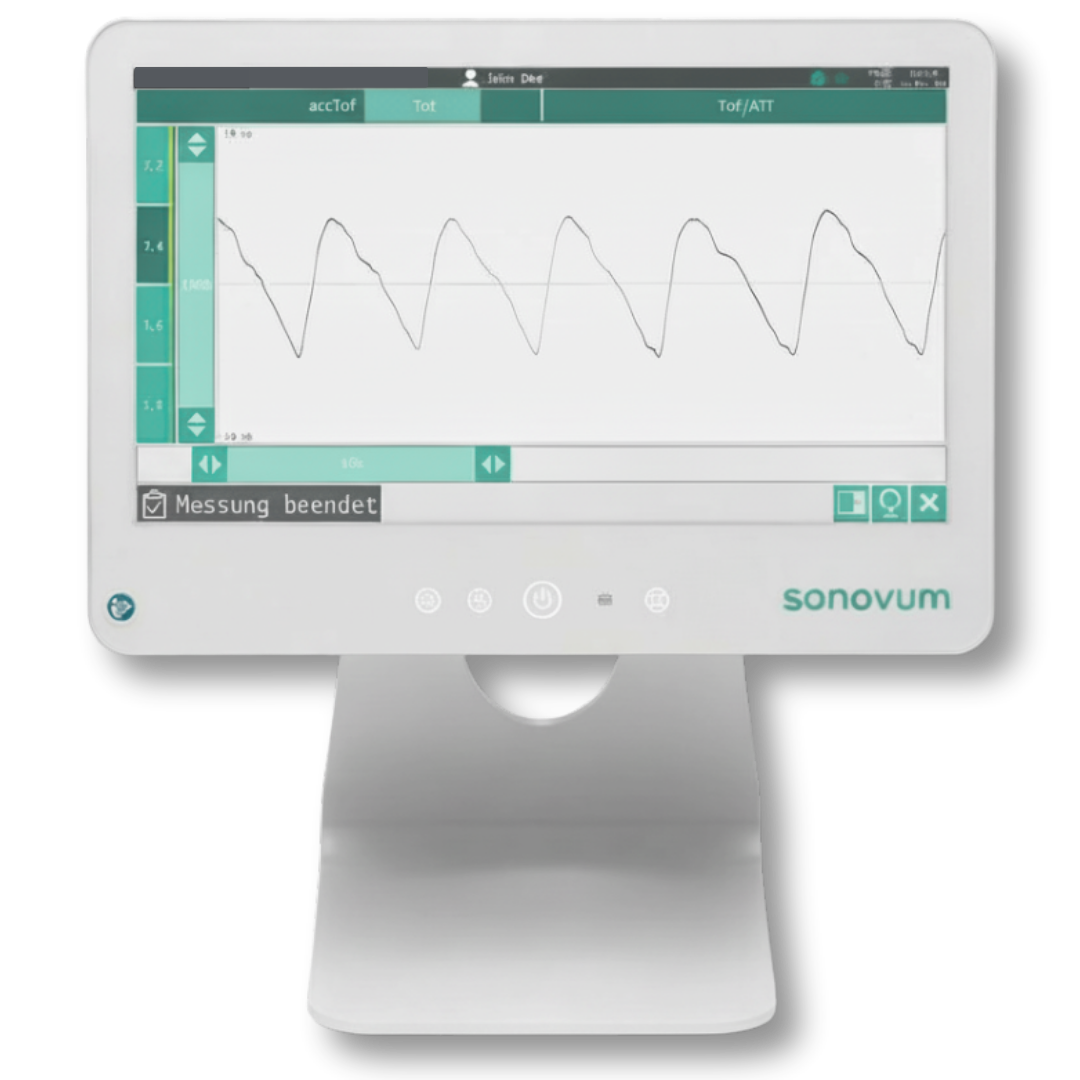
The signal relies purely on one physical parameter: the time of flight of the ultrasound signal. Based on this raw data, our technology generates a precise pulse curve that reflects the natural pulsation of the brain.
AI-powered classification
During development, an AI-based algorithm – our classifier – was trained and validated on extensive clinical study data to recognize subtle pulse patterns linked to normal or elevated intracranial pressure. Once released for clinical use, the classifier applies these validated features to patient data, providing a reliable, real-time assessment of intracranial pressure – without any further AI processing or learning in the field.

Smart technology
Revolutionizing brain pressure monitoring through completely non-invasive, real-time measurement - safe, comfortable, and risk-free for patients.
Want to know more about our technology? Get in touch with us.
Product Launch Q4 / 2026

Smart. Compact. Easy to Use.

A stand-alone device for non-invasive intracranial pressure (ICP) assessment
Our device provides real-time, non-invasive results, if elevated intracranial pressure can be identified.

It captures and analyzes ultrasound-based signals through a clinically validated and released algorithm, delivering consistent and clinically relevant information at the bedside.

Designed as a compact, stand-alone solution, it integrates seamlessly into existing clinical workflows.

Clinical Study

A multicenter clinical study is currently underway across 13 hospitals to evaluate our non-invasive approach to intracranial pressure assessment in patients with traumatic brain injury (TBI).

The study is being conducted in accordance with the European Medical Device Regulation (MDR). The clinical benefit lies in helping to identify patients with elevated intracranial pressure (ICP) through a non-invasive, bedside-accessible, physiological
assessment.

The study is scheduled to be completed in the third quarter of 2026 and is expected to provide the clinical evidence base for CE marking, which is anticipated in the fourth quarter of 2026.

Our Clinical Partners 

Economic Impact - better care, lower costs

Invasive intracranial pressure monitoring is a complex and costly procedure that can only be performed in a limited number of hospitals.

In the short term, this offers the potential for more targeted resource management, particularly when invasive ICP measurements are not immediately necessary or can be avoided in individual cases. Since ICP catheter placement is typically associated with a stay in the intensive care unit, avoiding unnecessary ICU days can result in significant cost savings. Depending on the healthcare system and care setting, the cost of an ICU stay is often as high as $3,000–$4,000 per day.

In the long term, there is potential to support triage, transfer, and treatment decisions through the early availability of additional information, thereby enabling more targeted allocation of resources throughout the entire care pathway.
Quelle: Tatsis F, Gouva M, Dragioti E, Veroniki F, Stamatis K, Papathanakos G, Koulouras V. Cost-Effectiveness in Critical Care: A Systematic Review of Empirical Evaluations. Healthcare (Basel). 2025 Nov 3;13(21):2783. doi: 10.3390/healthcare13212783. PMID: 41228157; PMCID: PMC12610864.

Frequently Asked Questions

Today, assessing intracranial pressure often requires placing an invasive probe inside the skull, which carries risk and therefore is typically reserved for only the most severe cases. As a result, many patients who could benefit from earlier intracranial pressure assessment are not assessed at all.

The device is in the advanced clinical validation phase and is currently undergoing the evidence-generation process required for CE marking in accordance with the MDR. The regulatory trial is expected to be completed in the third quarter of 2026, in accordance with European and internationally recognized regulatory standards.

We expect CE marking in Q4 2026.

AI is used during development to build and validate the model. Once released, the product operates with a fixed, validated algorithm, no adaptive AI at the bedside

We start with one clearly defined first use case, but the potential of non-invasive intracranial pressure assessment goes far beyond. Our goal is to build a new category in brain diagnostics and to expand step by step into additional neurological and emergency-care applications, where fast, safe brain assessment can change clinical decisions and outcomes.

We're here for you

If you have further questions, please don't hesitate to get in touch with us.
Revolution of ICP
AI-driven brain diagnostics you can trust. Making brain monitoring simple, fast, and clinically meaningful.
Subscribe to our newsletter
© 2026 Sonovum. All rights reserved.